UCP Fluent Joins Google for Startups Cloud Program
[ SYS.LOG // 2026-04-02 ]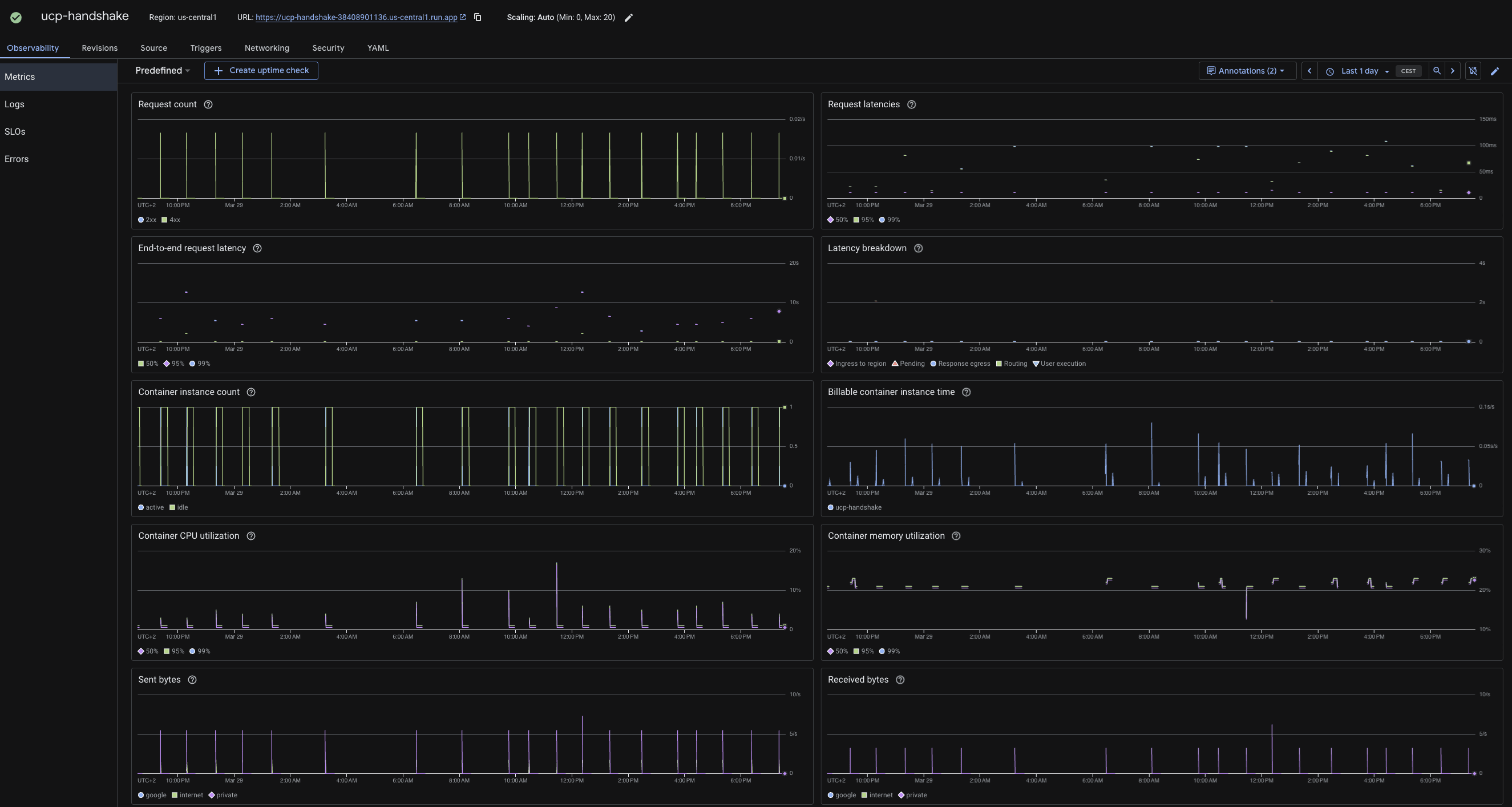
The shift toward machine-to-machine (M2M) commerce isn't approaching — it's already restructuring how products get discovered, evaluated, and purchased. AI agents are becoming the primary checkout interface, and they operate without patience for incomplete data. If a product catalog lacks semantic density, it doesn't get deprioritized. It gets excluded.
That exclusion is silent, automatic, and expensive.
Solving this at enterprise scale requires infrastructure that doesn't flinch. Today, UCP Fluent has been accepted into the Google for Startups Cloud Program, providing the GCP compute necessary to scale the platform's edge-network infrastructure. This serves as validation that the technical foundation the platform is building belongs in the same conversation as the AI commerce infrastructure problem it's designed to solve.
The Compute Requirement
The UCP Fluent Middleware Engine upgrades existing commerce infrastructure to Universal Commerce Protocol (UCP) standards algorithmically — no replatforming, no catalog migration, no disruption to existing systems.
The challenge is conversion at depth. Transforming unstructured, legacy inventory into clean, machine-readable data requires multimodal vision processing across massive catalog payloads. The engine runs on Gemini Enterprise Agent Platform, extracting granular semantic attributes — exact material composites, dynamic hex codes, dimensional tolerances — that autonomous agents require to route purchases with confidence.
Operating at this layer demands low latency and 100% data parity across all connected nodes. By deploying our Cloud Run control plane directly to the US-Central core, the control plane guarantees this architectural resilience for our North American retail networks today, establishing the structural foundation for our Latin American rollout late next year.
What This Infrastructure Enables
Google Cloud acceptance isn't the milestone. It's the infrastructure layer that makes the next ones possible.
With GCP resources now active, UCP Fluent is opening early sandbox access to enterprise retailers and brand operators preparing their catalogs for agentic commerce. The window for first-mover positioning in M2M infrastructure is narrow. The retailers who establish semantic density now won't need to retrofit it later.
The infrastructure is live. The program is open — see pricing and beta access to join it.
Related reading
SCALE YOUR CATALOG FOR THE AGENTIC ECONOMY.
UCP Fluent maps your store's data into the native, structured profiles required by modern AI shopping models. Take control of your visibility before the shift stabilizes.